
Category: News
Author Meredith Hambrock Finalist for The Stephen Leacock Medal for Humour

There are announcements that make you smile, and then there are those that confirm you’re exactly where you need to be.
Canadian writers Meredith Hambrock, Susin Nielsen, and Mark Waddell have just made the shortlist for the 2026 Stephen Leacock Medal for Humour. With a $25,000 purse, this isn’t just an award—it’s a national institution, honouring the legacy of humourist Stephen Leacock since 1947.
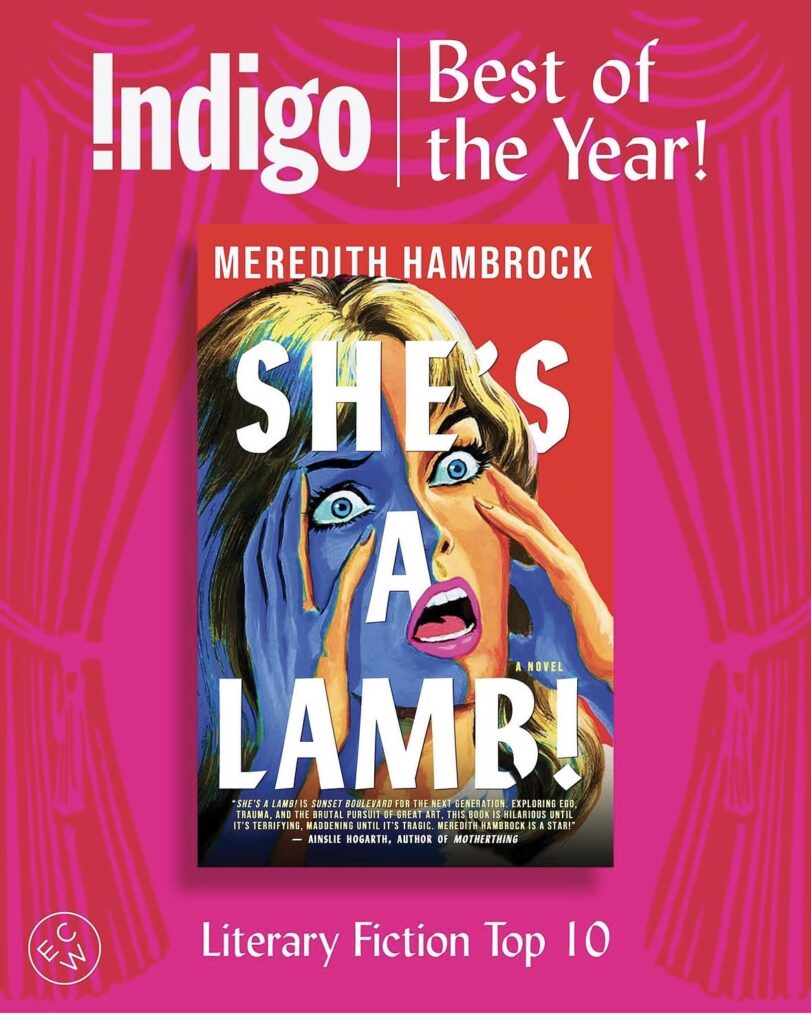
Meredith is in the running for her razor-sharp novel, She’s A Lamb!. It follows Jessamyn St. Germain, an actor fueled by the absolute certainty that she is destined for superstardom.The novel is also a brilliant homage to The Sound of Music—the exact show Jessamyn is dying to star in at a Vancouver theatre. While the world might see her as delusional, the book tracks her relentless quest, brilliantly exposing the sheer depths she’ll sink to for her shot.
It’s incisively funny, wildly smart, and the momentum doesn’t stop on the page. The book is already slated for a feature film adaptation by 4am Film Studios, with the screenplay adapted by none other than Meredith herself. Talk about total creative control.
Meredith is a novelist and television writer. She’s no stranger to the literary spotlight—her story You Should Go Over There was longlisted for the 2016 CBC Short Story Prize, and she’s also the author of the novel Other People’s Secrets.
Come June, the finalists will be flown out to Orillia, Ontario—the lakeside town that hosted Leacock’s summer estate. The winner will be announced live at a big event right there on the grounds.
Between now and takeoff, Meredith is tackling some very important prep: hitting the shops to curate the perfect wardrobe, and figuring out exactly which excerpts she wants to read to the crowd.
We can’t wait to see how this plays out. Stay tuned.
See the review in the Literary Review of Canada (Crushing It).
The Woolf+Lapin Talent Briefing: Spring 2026
We are proud to announce the latest additions to our roster—an elite group of creators, XR artisans, and world-builders redefining narratives and technology.
INVR.SPACE | Germany’s Prolific Immersive Studio
INVR.SPACE joins our roster to lead the charge in immersive experiences. We are happy to collaborate with INVR.Space giving us a sure footprint into the “Dôme” circuit and high-end XR distribution.
Monte Albers de Leon | Prestige Series
Harvard-educated attorney, with over two decades of high-stakes legal experience, Monte Albers de Leon has made a definitive transition to full-time narrative development. He is currently developing a high-profile collaboration with Shaun Redick and Yvette Yates Redick at Impossible Dream Entertainment, alongside a new series and feature projects with Woolf+Lapin.
Nic Bourgeois | Electronics Incarnate
At the intersection of experimentation and performance, Nic develops their own wearable digital instruments to liberate electronic music from its usual static nature. Their work—simultaneously raw and vulnerable—uses the body to explore queer and sensitive realities. Winner of the Gotfrit-Barlett Prize for Nœuds au ventre (2024), this Master’s candidate at the Université de Montréal has established themselves as a key figure in the digital arts, propelling an expressive physical presence into the heart of programmed logic, both in Canada and internationally.
New Voices
With the signing of Emily Roberson, Holly Richter-White, and Mark Alan Furney, Woolf+Lapin continues to prioritize voices that offer a visceral, intellectually rigorous perspective. These three creators exemplify a specific DNA: storytelling that is inherently cinematic, grounded in institutional knowledge, and unafraid of moral friction.
Emily Roberson: Lifestyles of Gods & Monsters is a retelling of Greek myth through the lens of modern celebrity rounding characters pursuing “escape velocity”.
Holly Richter-White: A RCMP member in Ottawa shaped by decades on the front lines of national and international security, Holly brings a forensic gaze to her feature Outgunned.
With more than twenty jury verdicts behind him, Mark Alan Furney crafts character-driven legal thrillers informed by his career as a public defender and prosecutor.
Paloma Dawkins | Symbiotic Frequencies
We are pleased to announce that Paloma Dawkins will participate in this year’s Forum at MUTEK. For the first time, the event unfolds across two adjoining cultural institutions: the Atrium et Studio-Théâtre des Grands Ballets and the Édifice Wilder – Espace danse.
Prix du Jury pour le vidéoclip « Mdē kuKu » du rappeur Komēdza
Le vidéoclip « Mdē kuKu » du rappeur Komēdza a remporté le prix du jury (meilleur clip) lors de la 11e édition du Festival Courts d’un soir.
Crédits de l’œuvre :
Réalisation : Komēdza & Éloïse Lavictoire
Direction de la photographie : Mathis Martin
The Book Boom: Hollywood’s Safety Net?
Sinclair Dubreuil & Stephan Dubreuil
How much of a book can you truly squeeze into a two-hour runtime? That question defines modern cinema, but we’re likely asking the wrong thing. It’s a strange irony: while 87% of the global population is literate, recreational reading is in a freefall. In the U.S. alone, daily reading for pleasure plummeted by 40% between 2003 and 2023—a steady, 3% annual decay.
So, Emily Brontë who? Jacob Elordi and Margot Robbie kissing passionately? Yes, please. Hollywood has realized that books are an infinite source of material, but more importantly, they come with a “built-in audience”—a recurrent phrase in the industry today. Is it playing it safe or playing it smart? Whatever your answer, this isn’t exactly a new phenomenon. Think back to the recent frenzy of Harry Potter and The Hunger Games, or even further back to classics like Lawrence of Arabia and 2001: A Space Odyssey. These were targeted at people who’d read the books, sure, but they appealed to everyone else too.
There is a specific art form in taking an imagined world and realizing it as a visual spectacle. Most people walking into the theater or streaming at home might not even know the movie was sourced from a book; to them, it’s just a new, exciting movie worth seeing for its artistic content. While some may go for new emerging voices à la Kane Parsons, the big studio slates seem to suggest that time-tested IPs is the “Safety Net” that makes the gamble worth taking. It’s an insurance policy written in ink.
Take the recent Wuthering Heights—a perfect example of an entertaining modern picture that somehow missed the mark of the book entirely. Brontë described Heathcliff as being of Lascar origin (modern-day Southeast Asia), yet we get trending heartthrob Jacob Elordi as the lead.
Wrong or right, it wasn’t the first time we’d seen a production’s reliance on casting whatever actor was currently ‘trending’ or part of the cultural zeitgeist, regardless of the character’s actual description. Nuances of race or even the current social landscape aside, for those who actually read the English gothic classic, the movie felt more “raunchy” than moving. The reality is that for many, Wuthering Heights will now be Emerald Fennell’s movie, her version, raunchiness and all, rather than Brontë’s book. Going down the Internet rabbit hole will have you read things like the movie is the worst thing to happen to Emily since she died of TB at 30. Ultimately, an adaptation—whatever its quality—is a testament to the original work’s aura and mystic power. That is never negligible. A classic stays alive precisely because it is breathing; it is kept vital by the very reinvention that is criticized.
We can level criticism at everything. But let’s ask: is Hollywood just banking on these adaptations to earn millions from pre-sold fans? Most of the time, yes. On an Excel sheet, it’s just sound business. But we at Woolf+Lapin know that it’s still up to the audience to decide if a movie actually works. Whether it’s an adaptation or not, the criteria remain the same: subject matter, cinematography, and even the soundtrack spell the difference between success and failure.
Look at Quebec’s hero, Denis Villeneuve. From our very own backyard, he adapted the critically acclaimed Incendies from the Wajdi Mouawad play, got an Oscar nod, and eventually launched an international career that led him to Frank Herbert’s Dune (wait a minute that’s another book yes?). Now it’s a massive franchise starring Zendaya and Timothée Chalamet.
So, where is this boom taking us next? In TV, it gave us Canada’s Heated Rivalry and just now Margaret Atwood’s The Testaments. In movies, it’s Project Hail Mary and The Housemaids. Interestingly, while producers want “safer bets,” the Academy just awarded Ryan Coogler “Best Screenplay” for his original script (Sinners), proving that originality will always win. Meanwhile, A24 is mining the online pipeline for inspiration (see trailer for Backrooms)—taking us into unknown places reminiscent of dreams.
And we’re walking the walk. Our own Meredith Hambrock is currently adapting her 2025 novel, She’s a Lamb (ECW Press), with the team at 4am Film Studios. We’ve also just welcomed the brilliant Emily Roberson to the pack, who brought her hit Lifestyles of Gods and Monsters (Macmillan) along for the ride.
For writers, the opportunity is hiding in plain sight. Write a short story, a memoir, a graphic novel, a blog (wait, can we turn this sentence into an immersive dome experience?)—the format doesn’t matter and the IP doesn’t have to be famous yet. It just has to be the right story at the right moment.
De Caravage à l’IA : Pourquoi le FIFA est un incontournable de la scène festivalière montréalaise
Le Festival International du Film sur l’Art (FIFA) s’est clôturé hier à Montréal, et chez Woolf+Lapin, nous sommes encore sous le choc esthétique. Bien que nous n’ayons pas pu tout voir, voici nos coups de cœur de cette édition.
1. Caravaggio (David Bickerstaff & Phil Grabsky)
Maîtriser le passé pour mieux inventer l’avenir. Plonger dans le clair-obscur de Caravage, c’est étudier l’intensité brute et la lumière. Pour Woolf+Lapin, il incarne l’artiste-entrepreneur : rebelle, talentueux et inoubliable. Véritable icône au « buzz massif » de son époque, il est le symbole de l’impact hors norme qui sera toujours propulsé à l’international.
2. Cocteau (Lisa Immordino Vreeland)
Jean Cocteau n’était pas qu’un poète, un cinéaste ou un dessinateur : il était tout cela à la fois. Il incarne l’essence même de la pluridisciplinarité que nous défendons chez Woolf+Lapin. Nous ne représentons pas des cases, nous représentons des visions. Redécouvrir Cocteau au FIFA, c’est célébrer l’idée que l’image de marque d’un artiste est, en soi, une œuvre totale.
3. Wider than the Sky (Valerio Jalongo)
C’est ici que Woolf+Lapin se sent le plus « à la maison ». Ce film est un croisement magistral entre philosophie, art et science. L’intelligence artificielle n’y est pas vue comme une menace, mais comme un nouveau pinceau.
À travers l’œuvre de Refik Anadol, le film nous invite à percevoir l’IA comme une intelligence collective, voire cellulaire, à l’image du monde vivant. Nous sommes fascinés par cette capacité de la technologie à amplifier l’expression humaine en explorant les réseaux de la conscience. Pour une agence nord-américaine, c’est le signal fort que l’avenir de l’art est intrinsèquement lié à l’innovation technologique.
Le FIFA est terminé, mais l’énergie demeure. Si vous avez manqué les projections en salle, vous avez jusqu’au 29 mars pour découvrir la programmation en ligne.
#WoolfLapin #Cultur #LeFIFA #ArtCinema #CulturalIndustry #TalentRepresentation #QuebecCreatif #FilmProduction @le_fifa @refikanadol
Artist Paloma Dawkins and the Endurance of Mythic Narratives
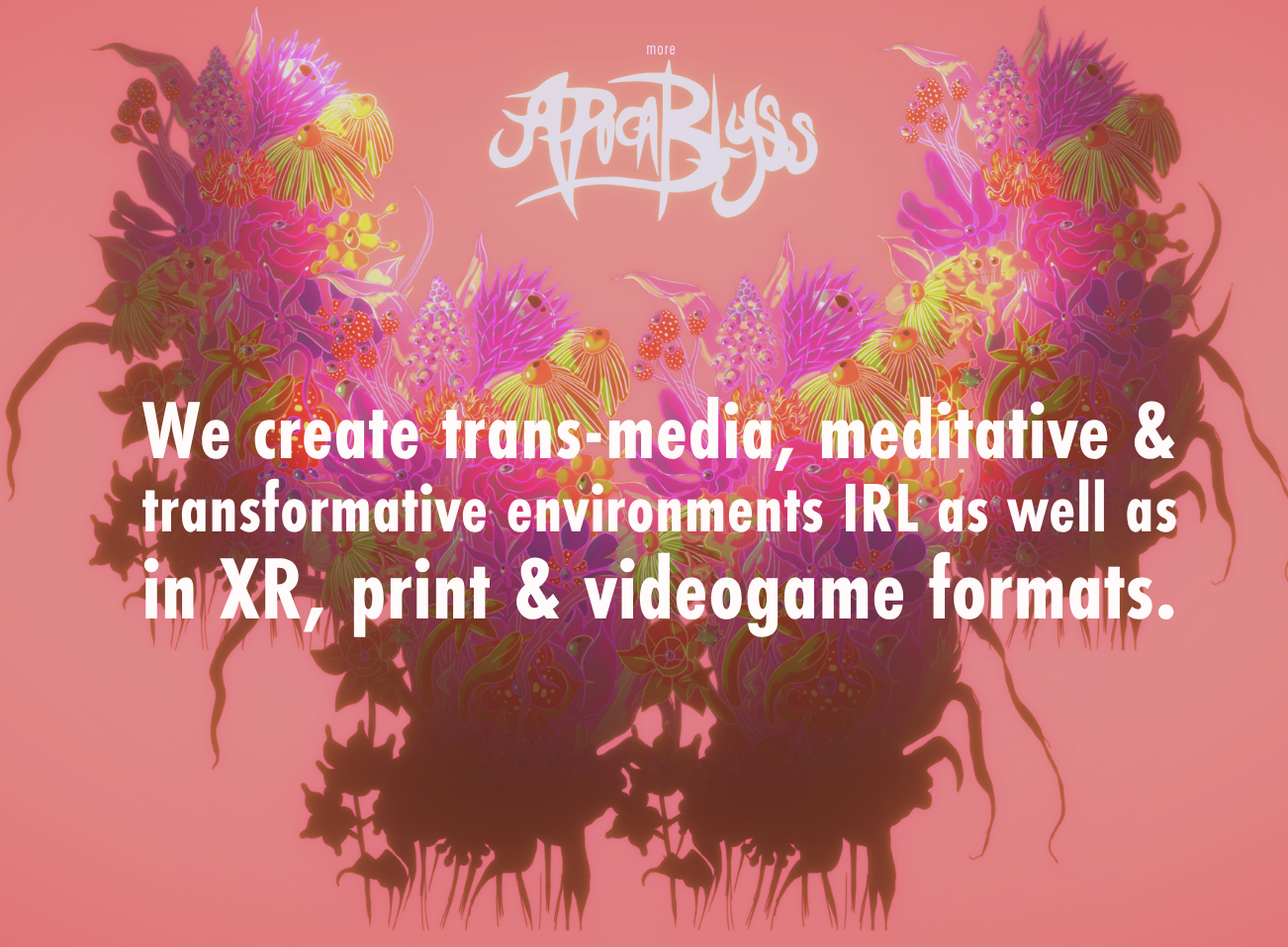
Paloma Dawkins is a Canadian/Mexican artist and award winning video game director. Dawkins’
games explore the intersections of mythology, technology, and ecology, using speculative
storytelling to question the structures that govern our existence. Dawkins’ hand drawn animation
evoke a spirit within them that brings inanimate things to life, players are encouraged to engage in
deep ecological listening reminding us that everything has agency and offers us potential for
kinship. In this way, her games are places where we can suspend our disbelief and imagine an
inclusive and shared ecological future. Dawkins’ has animated and directed games with the
National Film Board of Canada, Victoria & Albert Museum, Factory International and has won a
Canadian Screen Academy award. She has received grants from Canada Council for the Arts,
CALQ, Canada Media Fund and is currently pursuing an MFA in Critical Ecological Practices at
Emily Carr University of Art and Design.
“I situate myself as a second-generation immigrant, a white-passing person of color with a maternal
lineage traced to Nahuatl-speaking peoples of the Valley of Mexico and a settler lineage from
Britain. I move with the privilege of passing as white while remaining tethered to Indigenous and
immigrant histories. My practice emerges from these intersections, seeking relational ways of
creating and sharing art. I believe it is essential to imagine ecological futures that recognize both
our capacities and our responsibilities to tend to the garden of the earth. Through this lens, my
work blends the boundaries between nature and technology, engaging with themes such as
biopolitics, migration, the entanglement of virtual and ancestral memory, paradoxes of digital
existence, environmental collapse, and the endurance of mythic narratives.”
Collaborator Chris Mattman Joined CNN’s Elex Michaelson to Discuss New Delete Request + Opt-out Platform
According to the California Privacy Protection Agency, Delete Request + Opt-out Program (DROP) is the first of its kind. It allows consumers to request the deletion of their data from over 500 data brokers — all in one request. California is the first in the world to provide this platform.
Dr. Chris Mattmann is the Chief Data and Artificial Intelligence Officer (CDAIO) at UCLA, a first of its kind in the UC system. Before UCLA, Mattmann was the Division Manager of the Artificial Intelligence, Analytics and Innovative Development Organization at NASA Jet Propulsion Lab. Mattmann’s work helped uncover the Panama Papers scandal which won the Pulitzer Prize in Journalism in 2017.
Nouveaux alignements ― New Alignments
Début 2026, Woolf+Lapin a conclu un partenariat en production et en représentation avec Citizen Skull, basé à Los Angeles — non pas dans une logique d’expansion, mais dans un souci d’alignement réfléchi. Ce type de rapprochement ne nous est pas étranger. Au fil des années, Woolf+Lapin a su nouer des collaborations structurantes, notamment avec CinéGroupe (CG2 Media Network). Concrètement, ce partenariat nous rapproche davantage : des conversations de haut niveau, des opportunités bien réelles, et d’une lecture encore plus fine du marché américain tel qu’il se présente aujourd’hui. Dans ce contexte, Woolf+Lapin est en permanence à la rencontre de nouveaux talents — et plus encore actuellement. Nous recherchons activement des créateurs de contenu singuliers (auteurs, réalisateurs, technologues créatifs, etc.), que vous souhaitiez évoluer dans ce cadre élargi et transfrontalier ou emprunter d’autres trajectoires créatives à nos côtés.
In early 2026, Woolf+Lapin entered into a production and representation partnership with LA-based Citizen Skull — not as an expansion move, but as a deliberate alignment. This isn’t unfamiliar territory for us. Woolf+Lapin has partnered meaningfully in the past — notably with CinéGroupe (CG2 Media Network). In practical terms, this new partnership brings greater proximity: to higher-level conversations, to real deal flow, and to an even clearer view of the U.S. market as it exists today. As a result, Woolf+Lapin is always recruiting — but even more so now. We are actively looking for new, singularly talented directors, writers, and content creators, whether you’re interested in operating within this expanded, cross-border framework or pursuing other creative paths with us.
Ben Affleck’s + Matt Damon’s Rip: New Writing for Second Screen
By Sinclair + Stephan Dubreuil
Through their company Artists Equity, Ben Affleck and Matt Damon produced and starred in the police thriller RIP. And they stopped in at the Joe Rogan Experience to promote their new production, jokingly mentioning the regular press junkets on the circuit, speculating that talking to Joe Rogan alone could potentially be more viable than the aggregate of all their other interviews.
Among many other things, Affleck and Damon talked about Hunter S. Thompson, Chris Nolan’s Odyssey, MMA Fighting and the very astutely produced Adolescence, vaunting its straight up no-formula streamer production. The two brought up their negotiation with Netflix, and the decision to go for a streaming release instead of a theatrical one. They knew subjecting some of the plotting to data could make their film that much more successful.
Netflix, they noted, outlined five tiers of performance tied to financial incentives, with the highest defined by a 110% watch rate, meaning every subscriber watches a title, with some returning for repeat viewings. A rare occurrence.
More tellingly, they were encouraged to have a set piece in the first five minutes as well as reiterating the plot several times. The data suggests viewers are often distracted, on their phones or simply less attentive while watching amid the comforts and interruptions of domestic life. Add to that the growing share of content consumed on smartphones, and it is little wonder audiences are increasingly served repeated plot beats and oversized moments at sometimes incongruous points.
Affleck articulated the average viewer’s calculus succinctly: the cumulative cost of a large flatscreen, sound system, subscriptions, and reliable Wi-Fi has effectively recreated a customizable theater at home. Small surprise, then, that many contemporary streaming titles are written for the “second screen,” more tell than show, a reversal of the cinematic language Affleck and Damon grew up in.
The consolation is that film buffs will always know what filmmakers’ work is meant to be seen in cinemas, on the big screen. For example, Affleck mentioned Paul Thomas Anderson’s One Battle After Another and Christopher Nolan’s upcoming Odyssey.
The industry has spent the past few years narrating its own disruption (pandemic aftershocks, labor strikes, AI, the recalibration of streaming) as if uncertainty were a temporary condition. Rogan’s widely circulated episode offers something clearer: not resolution, but recognition. From Affleck and Damon’s vantage point, the path forward is less about stability than about momentum. Films are still getting made. Deals are still closing. Careers are still steaming ahead. Uncertainty, it seems, is the only constant.