Helter Skelter: Cinema Between Soul and Prompt

If you spent any time walking between the panel rooms and screening halls of the major film festivals this year, you could be forgiven for thinking you were attending two entirely different industries occupying the same physical space.

Some weeks ago at the Venice Film Festival, AI creative systems like TapNow hosted the panel “AI x Cinema: The 10,000 Parallel Universes Initiative” at the Venice Production Bridge, pitching a future of hyper-scalable, prompt-to-series pipelines to produce works for dedicated creator-focused platforms like Glanze, a new AI-native streaming platform launched by Tamar AI at the 83rd Venice Film Festival.

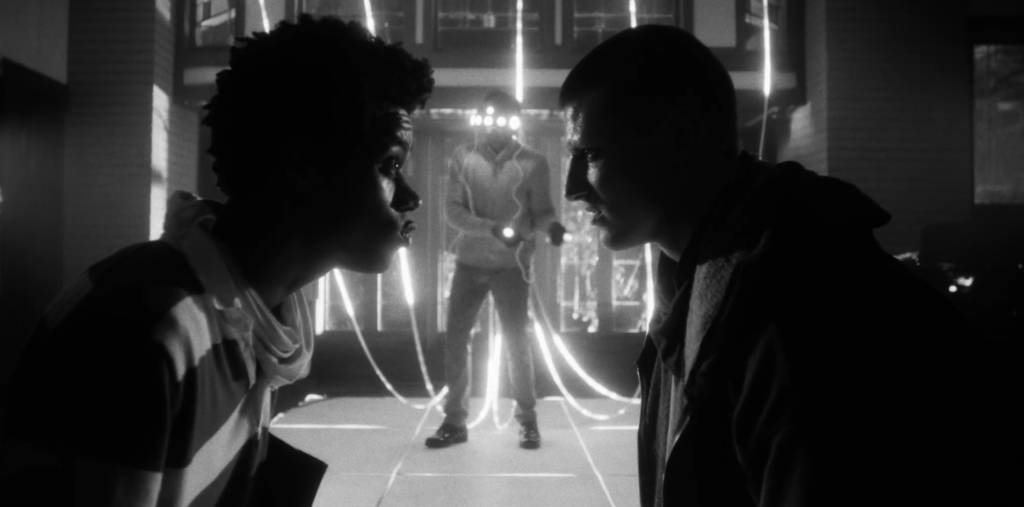
The independent industry—and not surprisingly, many emerging auteurs—are the ones embracing this technology with open arms due to drastically reduced costs and expanded creative freedom. These are the very types of new voices that festivals like the Mostra have always encouraged and welcomed. Indicative of this shift, the Reply AI Film Festival, which runs in tandem with Venice, welcomed over 3,000 submissions this year: Canadian director Robert Gaudette won first prize with his A Face Only A Mother Could Love, above. Watch and you’ll see why.

However, there are those who rightly or wrongly maintain a relentless moral stand—giving a resounding “Fuck AI” at every turn and declaring that machine-generated art is inconsequential at best or “slop” at worst.

“We are,” as director Rob Minkoff (The Lion King), serving as a judge for the Reply AI Film Festival, recently noted in an interview in Venice, “living in a bifurcated time.”

It’s an era where the film industry finds itself split down the middle: suspended between the frictionless promise of algorithmic generation and the fierce, protective instinct of human authorship.

The Auteur’s Stand

To the artisan class—the writers, actors, and directors whose crafts were forged through physical limitation—this technological shift is viewed with deep skepticism rather than as democratization.

Yet at Venice, legendary filmmaker Paul Schrader approached the transition with cold, pragmatic realism, pointing out the technological inevitability of synthetic performers and AI actors. He didn’t offer a moral defense. But rather an analytical diagnosis of market forces, even noting that his next film, Three Guns at Dawn, is a technology experiment.

This tension played out directly on the ground during festival panels. An insightful discussion on how veterans and jurors navigate these emerging tools while debating the preservation of human authorship can be found in this Venice AI Film Festival Interview Analysis. This video provides a direct look at how Hollywood directors and AI platforms wrestled with the question of technology versus human craft.

Beyond the Prompt: Helter Skelter and the Art of Appropriation
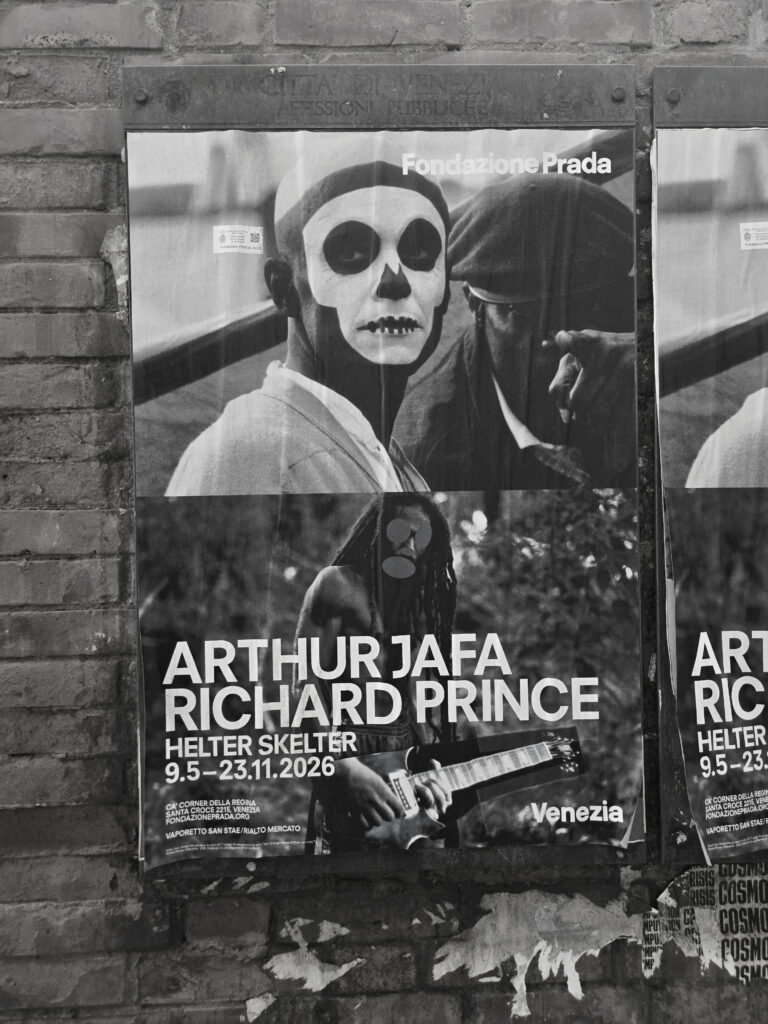
The most compelling debate around synthetic media and digital manipulation wasn’t happening solely at the Mostra; it was taking place at the Venice Biennale proper. It resides in the work of radical artists who use digital tools not to cheapen human intent, but to interrogate it.

Case in point: Arthur Jafa’s BG (2024)—also known as BEN GAZARRA—featured prominently alongside Richard Prince in the Helter Skelter exhibition at Fondazione Prada during the 2026 Venice Biennale.

Jafa didn’t ask an AI generator to invent a movie from scratch. Instead, he took 73 minutes of the violent climax of Martin Scorsese’s Taxi Driver (1976)—ironically written by Paul Schrader—and digitally altered and recast the secondary characters (the pimps and johns originally played by Harvey Keitel and other white actors) with Black performers.

Jafa’s intervention unearths a real, repressed layer of cinema history: Schrader had, quite ironically in light of his comments at Venice, originally written those roles for Black actors. However, Scorsese and the producers altered the casting out of fear of triggering intense racial controversy at the time. Through digital manipulation, Jafa doesn’t create “content out of thin air”—he uses image manipulation as a scalpel to dissect race, systemic violence, and the historical choices embedded in American visual culture.

Jafa’s work highlights the profound difference between AI as a content-generating engine and digital tools as an extension of artistic intent. One seeks to bypass human effort; the other uses technological intervention to provoke deeper human reflection.

Read also about Richard Prince whose work on appropriation was alongside Jafa’s at the Fondazione Prada.

Where Do We Stand?

The film industry isn’t facing a simple technological upgrade—it is undergoing a profound identity crisis. The union strikes laid the groundwork for consent, credit, and compensation, but the cultural battle is far from over.

Edward Saatchi, CEO of Fable Studio, noted during an interview in Venice that he is producing an AI feature directed by Zach London (aka Gossip Goblin). Saatchi argues that the unique perspective of AI observing humanity—saying, in effect, “we see you”—is fundamentally new. “Being non-human is new. They’re observing us and our society, and they can see the disconnect between what we say about ourselves and how we behave,” Saatchi stated. “We are at a tipping point where a truly original work of art made by AI can move us and spark curiosity.” London’s film, titled Gods Don’t Give Gifts, is set for a theatrical release this November.

At Woolf+Lapin, we spend every day advocating for singular, visionary voices. As the industry fractures between the “10,000 parallel universes” of automated media and the uncompromising craft of human auteurs, the boutique’s position remains clear:

A machine can synthesize a million frames, process a library of archives, or execute a prompt in seconds. But it takes a human spirit—with all its flaws, history, and political weight—to give those frames a reason to exist.
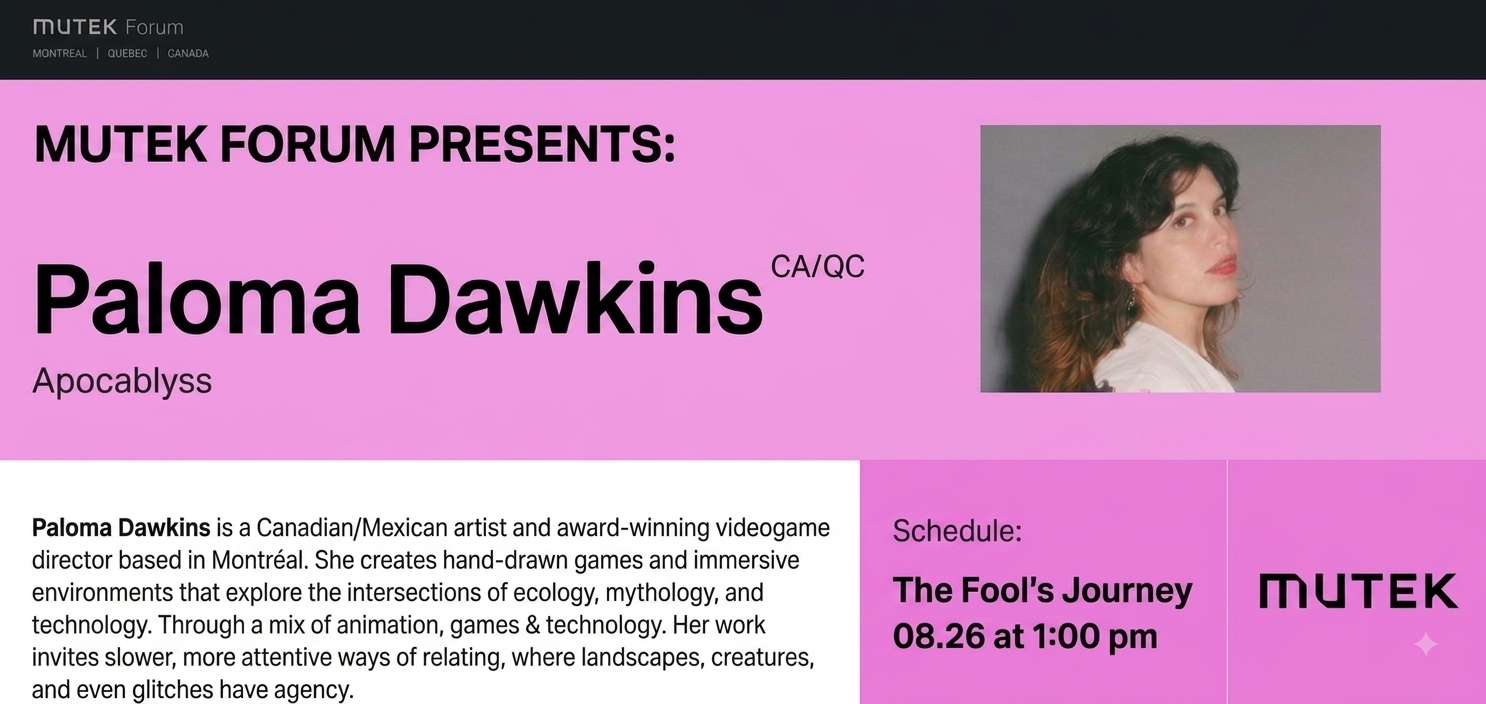
Paloma Dawkins Presents her Keynote The Fool’s Journey at Mutek

Dawkins’ practice is grounded in lived experience and close observation of the world. She transforms encounters with environments and nonhuman beings into evolving digital ecosystems, where players are encouraged to engage in forms of deep listening and relational awareness. Her work questions how interactive systems shape perception, attention, and our relationship to the more-than-human world.

She has collaborated with the National Film Board of Canada, the Victoria & Albert Museum, and Factory International, and has received a Canadian Screen Award. Her work has been supported by SSHRC, the Canada Council for the Arts, CALQ, and the Canada Media Fund. She is currently completing an MFA in Critical Ecological Practices at Emily Carr University of Art + Design.

A living echo of the Forum’s theme, The Fool’s Journey asks us to sit with uncertainty and read it as possibility.

The Apocablyss Universe will also be available to play in the Forum Lounge on August 26th, drop in and draw a card. Paloma will be doing Tarot card readings from her own special deck. [Atrium + Studio-Théâtre des Grands Ballets]

From the Vault: How Woolf+Lapin and Patrick Boivin Pre-Dated FIFA 26 with Spain’s Andrés Iniesta

Everyone is talking about the Spanish national team’s slick gameplay in FIFA 26 right now. But at Woolf+Lapin, we’re throwing it back to 2012 when we collaborated with Montreal filmmaker Patrick Boivin on a legendary Nike ad starring a marionette version of then Spanish 2010 World Cup & UEFA EURO 2012 hero Andrés Iniesta.

With figures by South Korea’s Coolrain, animation by Aardman, and agency magic by Wieden+Kennedy (London), this stop-motion spot remains an absolute masterclass in visual storytelling.

Patrick Boivin’s signature style brought an incredible, energetic entertainment value to the screen that still holds up flawlessly today. Next time you pass the ball with Spain in FIFA 26, remember the time Iniesta was controlled not by a thumbstick, but by actual puppet strings.

Even if you aren’t shopping for football shoes, the entertainment value of Boivin’s direction holds up flawlessly today. Check out the vintage spot!

A Must-See on the Genre Festival Circuit: Montreal’s Fantasia International Film Festival is Here

The 30th edition of the Fantasia International Film Festival promises to be a landmark one. For three decades, Fantasia has been more than just a Montreal summer fixture; it has grown into a massive international hub for genre filmmaking while keeping its gritty, community-first soul. Back in the late 1990s, when the festival was still finding its footing at the Imperial Cinema, it was already punching well above its weight. It was during these early years that legendary Shaw Brothers star Gordon Liu came to town, and anime icon Satoshi Kon chose Montreal to host the 1997 world premiere of his debut masterpiece, Perfect Blue. Those early, chaotic days laid the groundwork for the festival’s unique reputation: a place where the biggest names in boundary-pushing cinema could show up and sit in the theater alongside a rowdy, passionate crowd.

As the years rolled on, that reputation only solidified. In 2009, Eli Roth came to Montreal to represent Quentin Tarantino’s Inglourious Basterds (in which he played the “Bear Jew”) for a massive North American premiere. Guillermo del Toro’s legendary 2016 masterclass—where he famously called the festival a “shrine”—remains etched in the memory of anyone lucky enough to squeeze into the room. Meanwhile, titans like The Texas Chain Saw Massacre director Tobe Hooper and An American Werewolf in London’s John Landis brought decades of horror history directly to the Concordia Hall stage. The magic of Fantasia has always been this total lack of pretension; Hollywood stars and indie legends alike walk the same hallways as the fans, bound together by a shared love for the weird, the wild, and the visceral.

The list of those who made the trek to Montreal over our years of attending is legendary. There was the sheer, chaotic energy of Robert Pattinson walking the carpet in 2017, sitting right inside the Hall Theatre alongside Josh and Benny Safdie to watch Good Time. There was Kevin Smith in 2016, visibly crying on stage after a massive ovation for Yoga Hosers before talking to us like old friends for an hour. We had Kevin Bacon in 2015 spending a whirlwind 24 hours in town for Cop Car, and the master John Woo in 2022, accepting a lifetime achievement award before treating us to a double feature of Hard Boiled and Face/Off.

Even when the talent couldn’t physically cross the globe—like South Korean icon Song Kang-ho staying home in 2017 but sending a heartfelt video for A Taxi Driver—the crowd made sure they felt the Montreal love. Just recently, in 2024, Elijah Wood walked the carpet to introduce his film Bookworm, and in 2018, Canadian genre royalty Michael Ironside brought it all full circle, presenting Knuckleball and hosting a masterclass where he regaled us with stories of filming David Cronenberg’s Scanners right here in the city.

Now, as the festival celebrates its milestone 30th anniversary this summer, the legacy continues to write itself. Last year alone was unforgettable, featuring a wonderful masterclass by composer Danny Elfman. This year, we are seeing directors like Nicolas Winding Refn return to Montreal to open the festival with his highly anticipated Her Private Hell and receive the Career Achievement Award, alongside trailblazing voices of the new genre guard like Jane Schoenbrun. We are also incredibly excited for the legendary Robert Lepage masterclass.

On the film front, we’re especially eager to catch Godhead, The Last Temptation of Becky, and Colony, the latest feature from Train to Busan director Yeon Sang-ho. It’s a full-circle moment for a festival that began as a niche showcase for imported Asian action films and evolved into a global powerhouse. Whether you’ve been buying tickets since the beginning or are just now standing in your first hot July queue on de Maisonneuve, the rule of Fantasia remains unchanged: expect the unexpected, respect the classics, and don’t forget to meow when the lights go down.

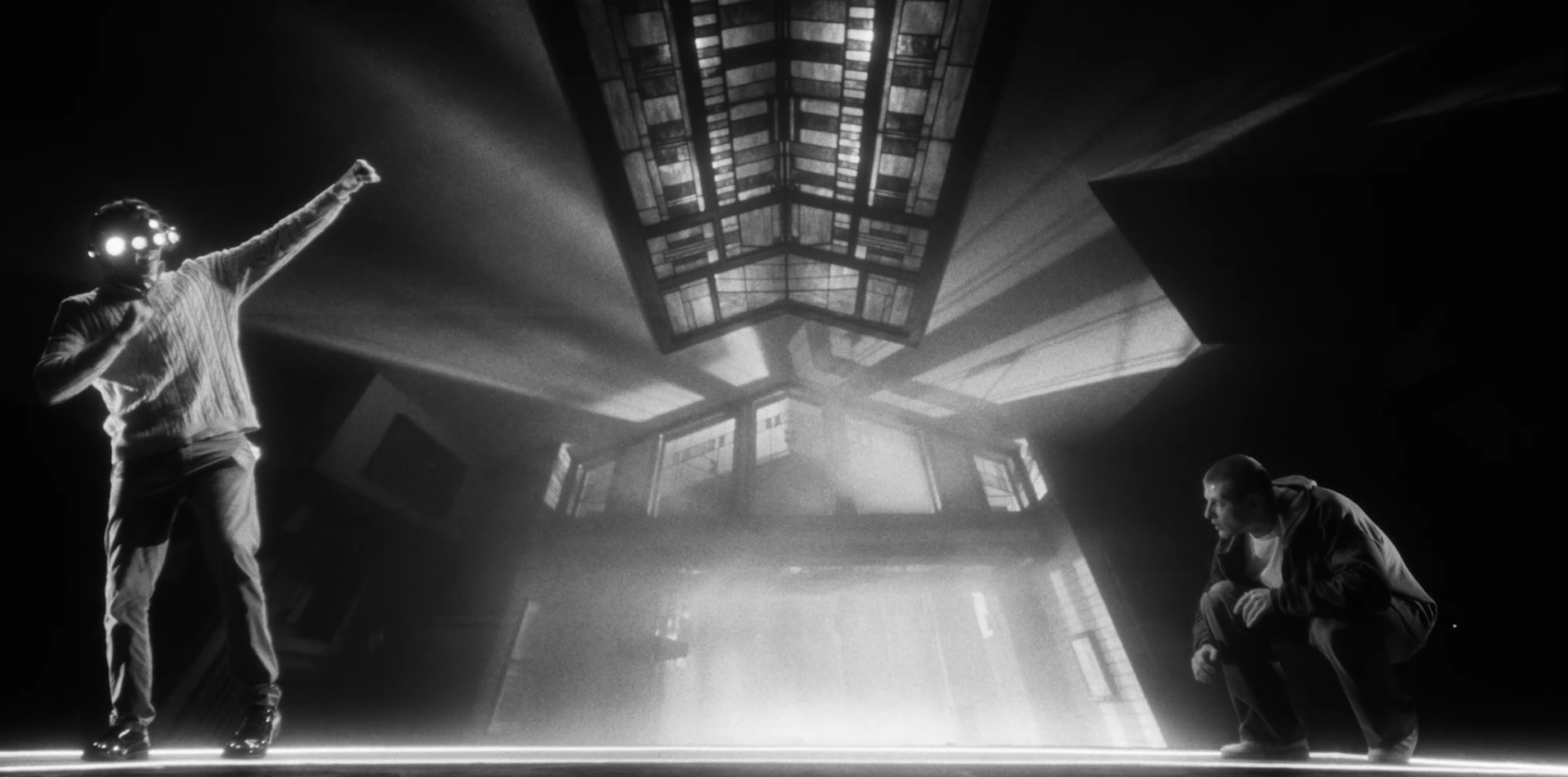
R34L17Y, A First Chapter: Caleb Slain’s Expressionist Take on a Church’s Urban Outreach Program

By Caleb Slain

The church’s urban outreach program was called ‘Teen Night,’ and once a week they’d round up at-risk teens and give them a pool table and healthy Christian role models. My mom said I needed good role models. My dad worked on the road and had ‘turned his back on God,’ so Youth Pastor Jeff stepped in to provide adolescent mentorship and explain manhood and sex and masturbation when I was twelve. He also explained we needed to raise $500 to earn a spot building schools in Mexico.

One time this kid, Tony, pulled a knife on Jeff, and Jeff talked him down as if Tony was waving a pool noodle. Teen Night was Michigan’s impoverished youth: a hormone-shaped splatter of Black, White, and Mexican girls and boys without options. I was haphazardly poor and one of nine children. My parents were the rare story of downward mobility in America: middle-class kids who grew up to raise their own family in the hood. On my block, that made us lucky.

Jeff welcomed Tony back the next week.

No kid at Teen Night had travelled outside America. Many hadn’t left West Michigan. For us, the first chance to see the world cost $500 and meant building schools in Mexico or Guatemala on road trips that turned church buses into hotbeds for teen pregnancy. I never went on the trips, but I saw what caged and lonely kids will do to earn that slice of freedom.

The characters in R34L17y are based on real people. They hurt themselves and each other. They make us laugh and let us down. Like lush black-and-white memories of a soft-focus America, I remember more fondly than it deserves. When you grow up at Teen Night, the world beyond your neighborhood is a theory. You don’t know your life is tragic. You’re easy to judge, and we do.

Tony never brought a knife back on Tuesday nights. After a while, we became friends. As much as anyone could be friends with Tony. I remember he liked to ask new kids, ‘What’s the worst thing you’ve ever done?’

Think about it. Stop and think about it. What’s the worst thing you’ve ever done?

I dug a grave a week after my seventeenth birthday in the glow of a minivan’s headlights. I knew my girlfriend had been abused by her mom’s boyfriend before we dated, then one day I found out it never stopped. The adults she told didn’t believe her. Maybe due to his status, or hers. I’m lucky there were dogs at his house that night. I’m lucky that grave stayed empty. But what if one decision was all anyone ever knew about me? What if one teenage brain with no concept of consequence got life before learning what life is?

It happens in America. It will keep happening in America.

Tony went to prison a year later.

Caleb’s short film is available on request. The whole project includes 3 more parts.