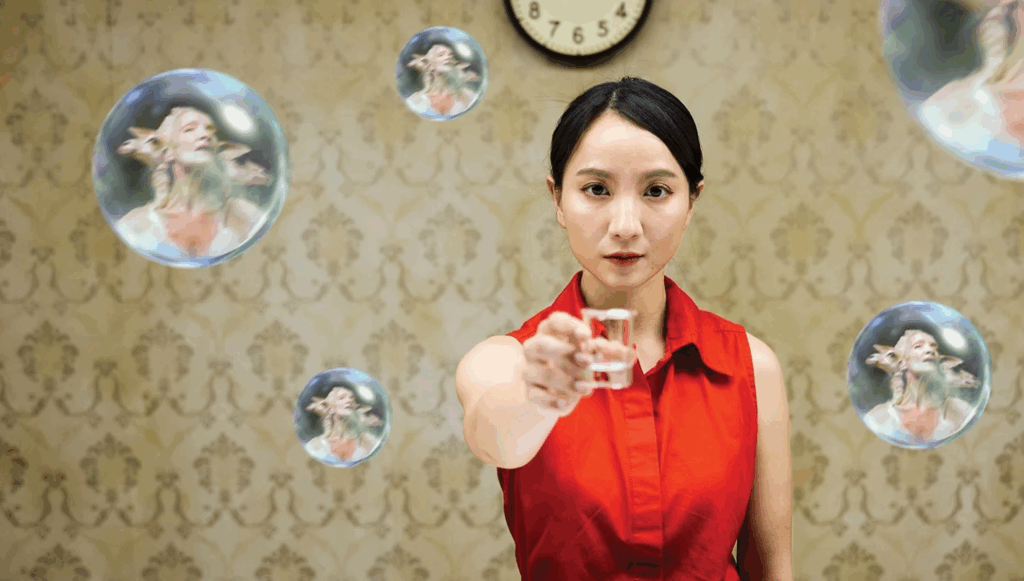
We are posting this video because we believe strongly in AI ethically generated content.
Back in April, AI production studio Asteria announced its first live-action feature, Uncanny Valley, which will also mark the directorial debut of studio co-founder Natasha Lyonne (Poker Face, Russian Doll).
The film will be created using a blend of AI tools and traditional filmmaking techniques.
Asteria positions itself as an “artist-led, ethical AI film and animation studio.”
Director Daniel Duranleau’s WINKIE is a clear stand out at Fantasia so far.
After discovering a young orphaned girl, a caring monster takes it upon himself to raise the child and make sure she stays out of harm’s way by any means necessary. It is one of the best shorts we’ve seen in a long while. From story-building, to makeup, costume design, production design, on to acting (no dialogue), it checks all the boxes.
Cast: Martin Dubreuil, Arlette Dubreuil, Éléonore Loiselle, Marie-France Marcotte, DOP: Simran Dewan, Glauco Bermudez, Editing: François Larochelle,Sound design: Casey Brown, Set design: Justin Lalancette, Music: Abèle Kildir, Special FX Makeup: Bruno Gatien, Production: Daniel Duranleau (Porte 7).
Daniel Duranleau is a Canadian filmmaker who has been active on the Quebec film scene for over fifteen years. Great defender of the poetic value of movies, he shapes his cinema with fantastical imagery in order to tackle themes that are dear to him: the human psyche, family relationships and power dynamics. Following on his short film “Mizbrük” (2015), “Winkie” is the second installment of an anticipated trilogy of films about monsters.
When Echo Hunter launched at AI on the Lot last May, it wasn’t just an adeptly done sci-fi short, it was Genre Film’s AI Moment.
Produced by Phantom X and approved by both SAG and ACTRA, it became the first generative AI film to cross a line many in Hollywood weren’t sure even existed: one that blends real human performance with AI generation, in a way that both unions and creators could live with.
In a post-strike landscape where AI is viewed as both opportunity and adversary, Echo Hunter lays provocative groundwork. The question it raises isn’t just can AI be used ethically—but how can it be used to amplify, rather than replace, human creativity?
To us, Phantom X’s amazing outing further proves that there’s logic—and a future—in making things with AI. Director Kavan Cardoza, aka Kavan the Kid, lead a lean three-person team and a hybrid workflow that fused traditional performance capture with cutting-edge generative tools and platforms like Arcana and Runway. Phantom X created custom models of real actors—preserving their likenesses, vocal tone, and movement—while augmenting their performances using AI. The result is a visual and tonal hybrid that is credibly and intensely eye-catching.
Getting SAG approval meant not just protecting actors’ rights, but designing an entirely new category of production. That’s to say nothing of the score which was also enhanced by AI. Composer Miguel Johnson provided several AI tracks that resulted in an effective soundscape.
But what truly sets Echo Hunter apart isn’t just the legal precedent or technological innovation—it’s the finished product. In the last month alone, the short has racked up several hundred thousand views. It’s good. Really good. And that matters.
Woolf+Lapin was founded on a belief: the most powerful stories come from the margins, not the center. From our home base in Montréal, we’ve built a talent boutique that refuses to follow industry convention. We seek out voices that defy genre, challenge markets, and make culture—not just content.
Over the past two decades, Woolf+Lapin has navigated shifting sands—broadcast to streaming, film to immersive, YouTube to AI—by staying grounded in one principle: creative proximity. We stand beside the creators. We are producers, managers, cultural translators. Our goal? To protect the creative spark while amplifying its commercial reach.
We’ve been early partners on projects that have gone viral, or opened up entirely new revenue streams. We’ve worked with tech visionaries and punk rockers. We’ve launched directors. We’ve protected misfits. We’ve seen disruption coming and helped our talent ride the wave, not drown in it.
Now, as AI, immersive media, and global streaming reshape the playing field again, Woolf+Lapin isn’t pivoting. We’re evolving. We’re helping talent build worlds—across formats, across borders. We’re forging alliances from Montréal to Los Angeles, from Cannes to TIFF, with a clear north star: creative integrity.
« ((WaYeï)) » est un morceau dans lequel je lève le voile sur une douleur sourde qui m’accompagne depuis toujours: la solitude. Je vis avec la peur d’être un poids, de déranger. Bien que je sois bien entouré, je m’isole instinctivement, choisissant d’affronter mes peurs et mes difficultés seul. À mes yeux, personne ne peut réellement mieux me comprendre que moi-même. Cette attitude est nourrie par une méfiance profonde que j’ai envers les autres (les loups sous la lune). Une mentalité que je reconnais comme étant à l’origine de mon isolement du reste du monde. Une mentalité que je commence tout doucement à changer.
Le morceau est maintenant à vous. Prenez le temps de l’écouter et de le lire. Vous avez le droit de l’aimer ou pas, mais soyez sincère envers vous-même.»