Happy to Welcome XR Creator/Director Pierre Friquet

Pierre “Pyaré” Friquet is a French XR creator and director whose work spans fiction, documentary, video games, and immersive experiences. A graduate of the Film & Television Institute of India, he developed early on an approach that blends classical storytelling, technological innovation, and sensory experimentation.

PYARé is best known for his award-winning immersive works. Spaced Out, his aquatic VR installation, was selected at the Sundance Festival and showcased in the cultural program of the Paris 2024 Olympic Games. He was creative collaborator and editor on the VR documentary You Destroy, We Create, produced by Meta, was nominated for an Emmy Award and won a Peabody Award. His pieces Jet Lag, Vibrations and Patterns have been presented at Cannes, NewImages, MUTEK, and the Festival du Nouveau Cinéma.

His work as a director and narrative designer also extends to video games (Captain Nemo, Kei’s Dream), AR, video mapping, immersive domes, and social VR. He has collaborated with major artists and institutions, including Jean-Luc Godard, Jean-Michel Jarre, Marc Caro, Chanel, Christie’s, Orange, and the French Ministry of Culture.

PYARé is the founder of NiGHT Immersion, a studio combining art and technology, behind MeRCURY, a waterproof VR mask designed for pool-based experiences. His work has been featured in Wired, Forbes, The Verge, Vice, CNET, and Rolling Stone.

After living in India, South Africa, and Canada, he is now based in Paris, where he is completing a video game for Meta as well as a documentary for an American streaming platform.

John Poliquin’s Horror Short Selfie

Director’s Statement:
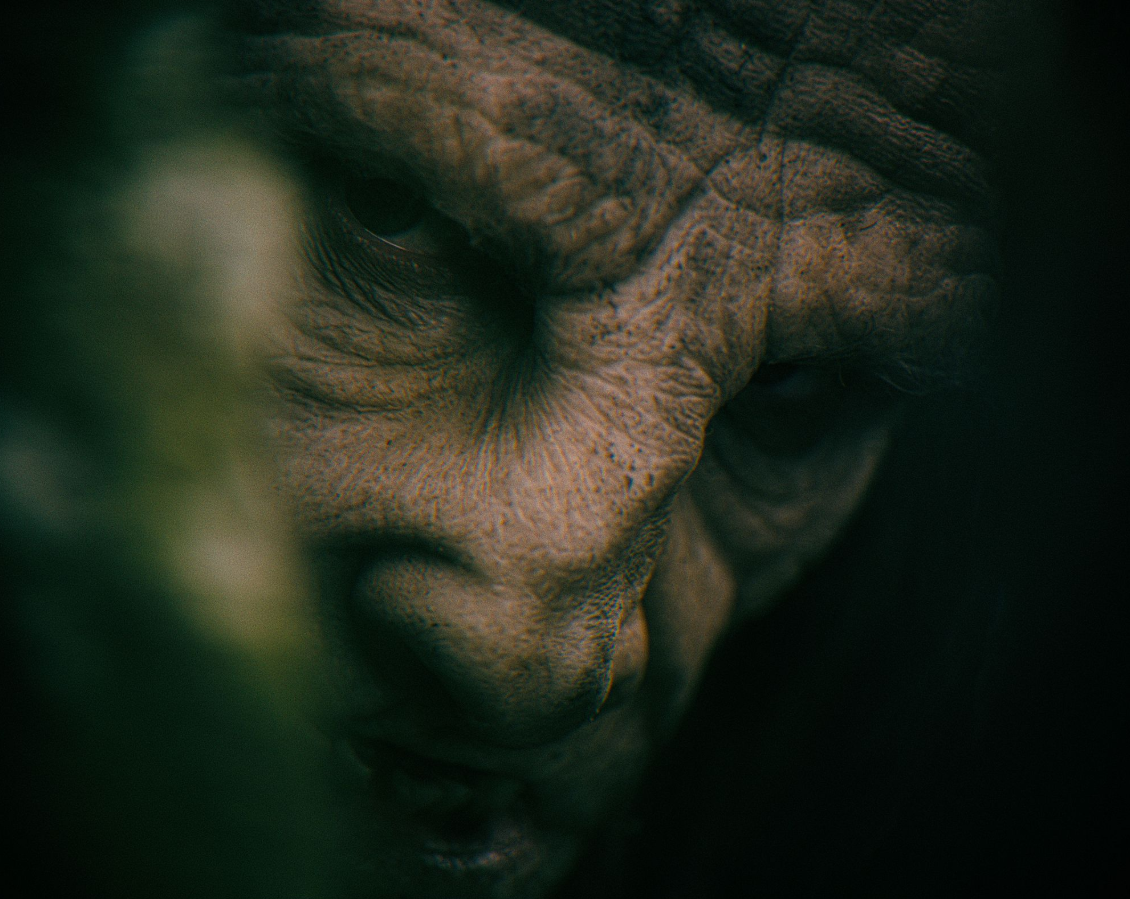
Collectively, we have all become tethered to our phones. They are extensions of us. In an era where information is the most valuable commodity on the planet, our phones know us better than we know ourselves. Social media apps hypnotize us with an endless scroll of beautiful people and posts targeted at us by an algorithm. All while collecting our data — recording our personalities, our memories, the way we look and sound. The very fiber of our being. We have given big data permission to own our faces… to own us. But what happens when the lines between reality and idealized “perfection” become blurred?

“Selfie” Credits:
John Poliquin
Director

Mutek 2025 Hightlights

This month’s 2025 edition of Mutek is in full swing. We particularly enjoyed London-based Harry Yeff’s talk on his research regarding creative applications for A.I. and machine learning. He focuses on performance, vocal experiments, and digital installations. He seamlessly gets in there between the human voice and technology, challenging conventional boundaries and promoting human-machine collaboration.

And mad respect for Kalmyk-American poet and language artist Sasha Styles whose award-winning work “bridges tradition and innovation through hybrid poetics, generative imagination, and collaborative intelligence. Her transmedia practice reframes poetry as both art and technology — a means of encoding experience across time — and blends word, image and algorithm to explore human voice in a digital age.”

.

And it is worth mentioning Phoebe Greenberg’s immersive project Blur, a mixed-reality theatre experience that explores this liminal state between life and death, fact and fiction. Greenberg teamed up with famed contemporary dance choreographer Edouard Lock. We only saw glimpses of it as it will premiere at La Biennale di Venezia next week.

And last but not least: props to Mexican-Canadian artist Rafael Lozano-Hemmer who gave a brilliant talk on his body of work.

Tyler Cowen: How AI is Changing Writing

“Tyler Cowen, an economist and writer, talks with me about how AI is changing writing and research. He explains a practical approach to using AI tools while maintaining your own voice and the ways he incorporates LLMs into his daily work. We talk about how people will be writing fewer books in the future and how he believes truly human writing will stand out among AI-generated content.”

Natasha’s Lyonne’s AI Film: Uncanny Valley To Use ‘Ethical’ AI and Traditional Filmmaking Techniques

We are posting this video because we believe strongly in AI ethically generated content.

Back in April, AI production studio Asteria announced its first live-action feature, Uncanny Valley, which will also mark the directorial debut of studio co-founder Natasha Lyonne (Poker Face, Russian Doll).

The film will be created using a blend of AI tools and traditional filmmaking techniques.

Asteria positions itself as an “artist-led, ethical AI film and animation studio.”

Daniel Duranleau’s Short, WINKIE, Clear Standout at Fantasia

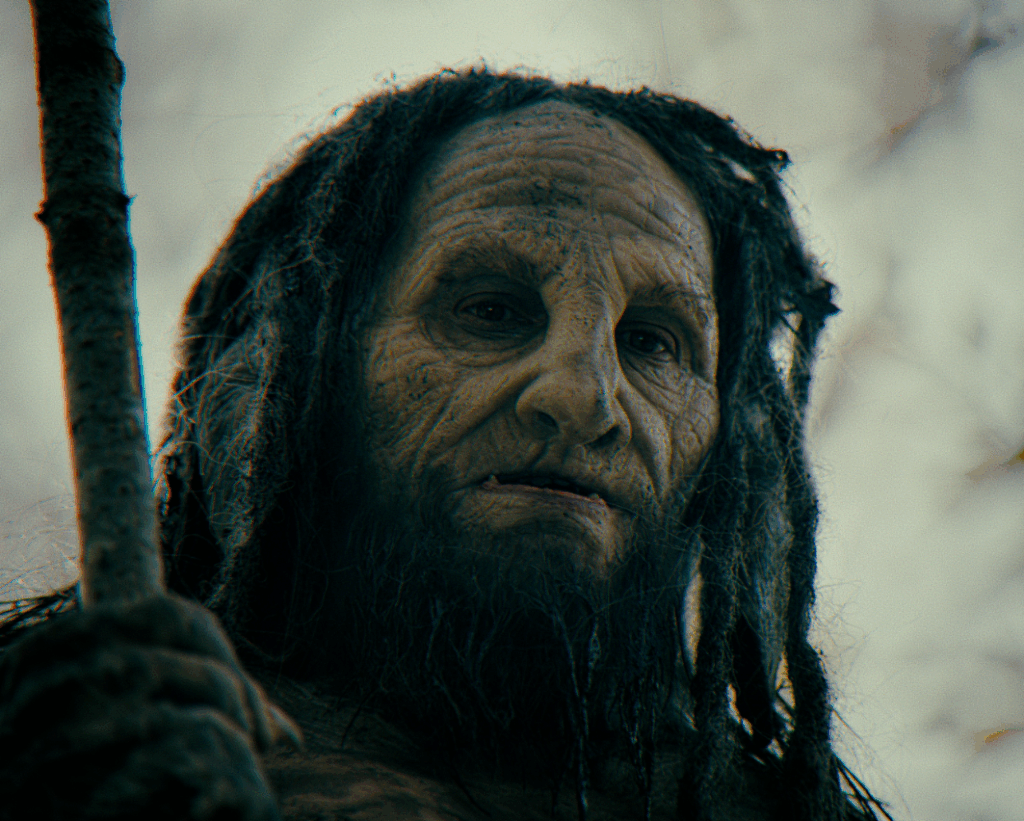
Director Daniel Duranleau’s WINKIE is a clear stand out at Fantasia so far.

After discovering a young orphaned girl, a caring monster takes it upon himself to raise the child and make sure she stays out of harm’s way by any means necessary. It is one of the best shorts we’ve seen in a long while. From story-building, to makeup, costume design, production design, on to acting (no dialogue), it checks all the boxes.

Cast: Martin Dubreuil, Arlette Dubreuil, Éléonore Loiselle, Marie-France Marcotte, DOP: Simran Dewan, Glauco Bermudez, Editing: François Larochelle,Sound design: Casey Brown, Set design: Justin Lalancette, Music: Abèle Kildir, Special FX Makeup: Bruno Gatien, Production: Daniel Duranleau (Porte 7).

Daniel Duranleau is a Canadian filmmaker who has been active on the Quebec film scene for over fifteen years. Great defender of the poetic value of movies, he shapes his cinema with fantastical imagery in order to tackle themes that are dear to him: the human psyche, family relationships and power dynamics. Following on his short film “Mizbrük” (2015), “Winkie” is the second installment of an anticipated trilogy of films about monsters.

Echo Hunter: First SAG-ACTRA Production Sanctioned in AI – Watershed Moment?

When Echo Hunter launched at AI on the Lot last May, it wasn’t just an adeptly done sci-fi short, it was Genre Film’s AI Moment.

Produced by Phantom X and approved by both SAG and ACTRA, it became the first generative AI film to cross a line many in Hollywood weren’t sure even existed: one that blends real human performance with AI generation, in a way that both unions and creators could live with.

In a post-strike landscape where AI is viewed as both opportunity and adversary, Echo Hunter lays provocative groundwork. The question it raises isn’t just can AI be used ethically—but how can it be used to amplify, rather than replace, human creativity?

To us, Phantom X’s amazing outing further proves that there’s logic—and a future—in making things with AI. Director Kavan Cardoza, aka Kavan the Kid, lead a lean three-person team and a hybrid workflow that fused traditional performance capture with cutting-edge generative tools and platforms like Arcana and Runway. Phantom X created custom models of real actors—preserving their likenesses, vocal tone, and movement—while augmenting their performances using AI. The result is a visual and tonal hybrid that is credibly and intensely eye-catching.

Getting SAG approval meant not just protecting actors’ rights, but designing an entirely new category of production. That’s to say nothing of the score which was also enhanced by AI. Composer Miguel Johnson provided several AI tracks that resulted in an effective soundscape.

But what truly sets Echo Hunter apart isn’t just the legal precedent or technological innovation—it’s the finished product. In the last month alone, the short has racked up several hundred thousand views. It’s good. Really good. And that matters.

The Next Chapter of Talent

On Shaping the Next Chapter of Talent

Woolf+Lapin was founded on a belief: the most powerful stories come from the margins, not the center. From our home base in Montréal, we’ve built a talent boutique that refuses to follow industry convention. We seek out voices that defy genre, challenge markets, and make culture—not just content.

Over the past two decades, Woolf+Lapin has navigated shifting sands—broadcast to streaming, film to immersive, YouTube to AI—by staying grounded in one principle: creative proximity. We stand beside the creators. We are producers, managers, cultural translators. Our goal? To protect the creative spark while amplifying its commercial reach.

We’ve been early partners on projects that have gone viral, or opened up entirely new revenue streams. We’ve worked with tech visionaries and punk rockers. We’ve launched directors. We’ve protected misfits. We’ve seen disruption coming and helped our talent ride the wave, not drown in it.

Now, as AI, immersive media, and global streaming reshape the playing field again, Woolf+Lapin isn’t pivoting. We’re evolving. We’re helping talent build worlds—across formats, across borders. We’re forging alliances from Montréal to Los Angeles, from Cannes to TIFF, with a clear north star: creative integrity.

Nous aimons bien Komedza…

Une fois de plus.

La relève nous tient profondément à cœur. En témoignent les projets récents que nous accompagnons, comme la réalisation d’Éloïse Lavictoire.

Ca nous permet de suivre les nouveaux sons de Komedza :

« ((WaYeï)) » est un morceau dans lequel je lève le voile sur une douleur sourde qui m’accompagne depuis toujours: la solitude. Je vis avec la peur d’être un poids, de déranger. Bien que je sois bien entouré, je m’isole instinctivement, choisissant d’affronter mes peurs et mes difficultés seul. À mes yeux, personne ne peut réellement mieux me comprendre que moi-même. Cette attitude est nourrie par une méfiance profonde que j’ai envers les autres (les loups sous la lune). Une mentalité que je reconnais comme étant à l’origine de mon isolement du reste du monde. Une mentalité que je commence tout doucement à changer.
Le morceau est maintenant à vous. Prenez le temps de l’écouter et de le lire. Vous avez le droit de l’aimer ou pas, mais soyez sincère envers vous-même.»

AI doesn’t belong to Silicon Valley alone.

At Cannes this year, both Fatih Akin and Hideo Kojima expressed cautious optimism about AI’s role in storytelling. After expressing mutual admiration and talking about their collaborations they expressed their views on AI. It’s not something to fear, but a tool—one that must be understood, integrated, and ultimately shaped to serve narrative rather than replace it. Akin notably remarked: “It is much like Milton’s Paradise Lost … it’s got so many layers.”

It’s a comparison that resonates. Milton’s Satan—rendered with tragic ambition, grandeur, and contradiction—is one of literature’s most complex and morally ambiguous characters. In invoking him, Akin wasn’t sounding an alarm, but pointing to a deeper truth: ethical ambiguity and creative power often come intertwined. That’s the terrain filmmakers must now navigate with AI.

Meanwhile, David Cronenberg, no stranger to provocation, defended AI use during the London Soundtrack Festival in remarks reported by The Hollywood Reporter. He dismissed the controversy surrounding The Brutalist—where AI was reportedly used to enhance Adrien Brody’s Hungarian accent—saying: “We mess with actors’ voices all the time.” He added, “I think it was a campaign against The Brutalist by some other Oscar nominees.”

Director Antoine Fuqua struck a similar tone, also speaking to Movieguide. Reflecting on past technological shifts, he said: “We’re creatures of habit. I remember when I started in videos and commercials, I shot on film. Digital was a thing we all kicked and screamed about. Turns out, it’s fantastic. It’s another paintbrush we can use to do our work. AI’s the same thing. AI doesn’t replace human feelings and human emotions.”

The pattern is clear: genre filmmakers, long at ease with technological disruption, are not merely adapting to AI—they are actively shaping the ethics around it. Not in policy white papers, but in daily creative decisions. Not with blind optimism, but with calibrated risk.

For them, the question is no longer should we use AI—but how do we use it responsibly, and who does it serve?